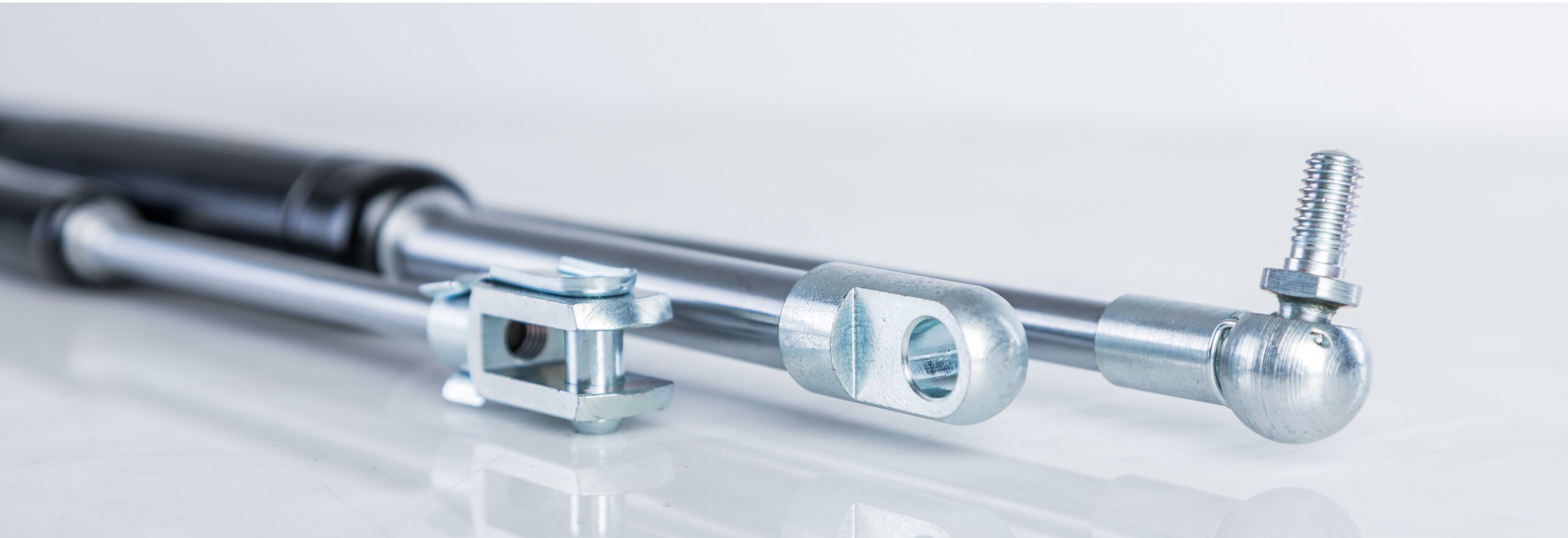
A stainless steel gas spring is a sealed, nitrogen-filled motion control component designed for controlled lifting, lowering, and holding of lids, doors, hatches, or machine guards. Built with corrosion-resistant stainless steel components, it excels in harsh, wet, or sanitary environments—making it indispensable in marine, food processing, pharmaceutical, and industrial settings where rust resistance and easy cleaning are non-negotiable. This technical guide breaks down its core characteristics, advantages, specifications, applications, and selection criteria to help you choose the right solution.
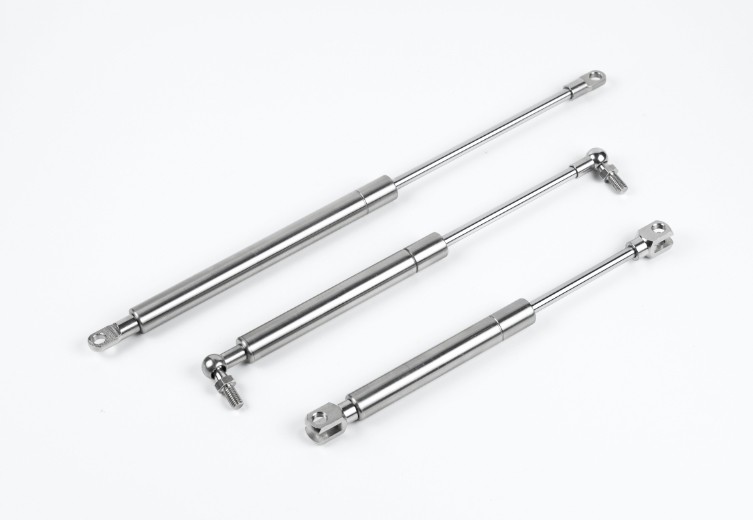
Fig. 1: Core structure of a stainless steel gas spring—stainless steel piston rod, pressure tube, nitrogen gas, and damping oil.
Key Characteristics
Stainless steel gas springs combine the functionality of standard gas springs with the durability of corrosion-resistant materials:
1. Construction Materials
- Piston Rod & Pressure Tube: Typically made from 300-series stainless steel (304 or 316L). 316L is preferred for extreme environments (saltwater, chemicals) due to superior corrosion resistance.
- Internal Components: Filled with high-pressure nitrogen gas (inert, non-corrosive) and a small amount of oil for damping and lubrication.
- Seals: Specially formulated to resist moisture and chemicals, ensuring airtight performance over time.
2. Operational Traits
- Self-Contained & Maintenance-Free: Sealed design prevents gas leaks and eliminates the need for regular lubrication or servicing.
- High Internal Pressure: Pressures can reach up to 300 bar—never open or modify the unit, as this poses safety risks.
- Smooth Motion: Damping oil controls extension/retraction speed, preventing abrupt movements and protecting hinges or mounts.
Main Advantages
Stainless steel gas springs outperform standard steel or mechanical coil springs in critical ways:
1. Superior Corrosion Resistance
- Withstands saltwater, moisture, chemicals, and frequent washdowns—ideal for marine, food, and pharmaceutical applications.
- 316L stainless steel variants pass 1,000+ hours of salt spray testing, ensuring long-term durability in harsh conditions.
2. Controlled, Consistent Performance
- Delivers smoother motion than mechanical coil springs, with minimal force progression (typically 25–30% force increase during compression).
- Force output can be tailored (40N–2500N+) by adjusting internal gas pressure, matching diverse load requirements.
3. Sanitary & Easy to Clean
- Non-porous stainless steel surface resists bacterial growth, complying with food safety (FDA) and pharmaceutical (GMP) standards.
- No crevices for debris buildup—simple wipe-downs suffice for maintenance.
4. Versatile Environmental Adaptability
- Operates reliably in temperature ranges from -40°C to 80°C (special seals available for -55°C to 200°C).
- Suitable for indoor, outdoor, marine, and industrial environments.
Typical Specifications
Vendors offer stainless steel gas springs with standardized and customizable specs to fit diverse applications:
| Specification | Range |
|---|---|
| Force Rating | 40N–2500N+ (fixed or adjustable force options) |
| Stroke Length | 10mm–1000mm (custom lengths available on request) |
| Rod Diameter | 6mm, 8mm, 10mm, 14mm |
| Tube Diameter | 15mm, 18mm, 23mm, 28mm |
| Material Grade | 304 (general use), 316L (marine/chemical-resistant) |
| End Fittings | Threaded (M5–M10), ball sockets, eyelets, clevis forks |
| Salt Spray Resistance | 1,000+ hours (316L variants) |
| Cycle Life | 50,000 double strokes (depending on usage and environment) |
Common Applications
Stainless steel gas springs are trusted across industries for their durability and performance:
1. Marine Industry
- Boat hatches, engine covers, and storage lockers—resist saltwater corrosion while holding lids open for safe access.
- Submarine hatches and offshore wind turbine access doors—withstand harsh marine conditions.
2. Food & Pharmaceutical Equipment
- Food packaging machinery, conveyor covers, and sanitary access panels—easy to clean and compliant with hygiene standards.
- Pharmaceutical processing equipment—non-magnetic options available for MRI-compatible environments.
3. Industrial Machinery
- Machine guards, access panels, and toolbox lids—resist chemicals and moisture in manufacturing plants.
- Outdoor or washdown-equipped machinery—no rusting or performance degradation.
4. Automotive & Specialty Vehicles
- RV awnings, truck toolboxes, and emergency vehicle storage—withstand weather and road debris.
- Ambulance oxygen tank storage and marine vessel seating—reliable in mobile harsh environments.

Fig. 2: Stainless steel gas springs in marine hatches (left) and food processing equipment (right).
Basic Selection Tips
To choose the right stainless steel gas spring, prioritize these key factors:
1. Define Core Requirements
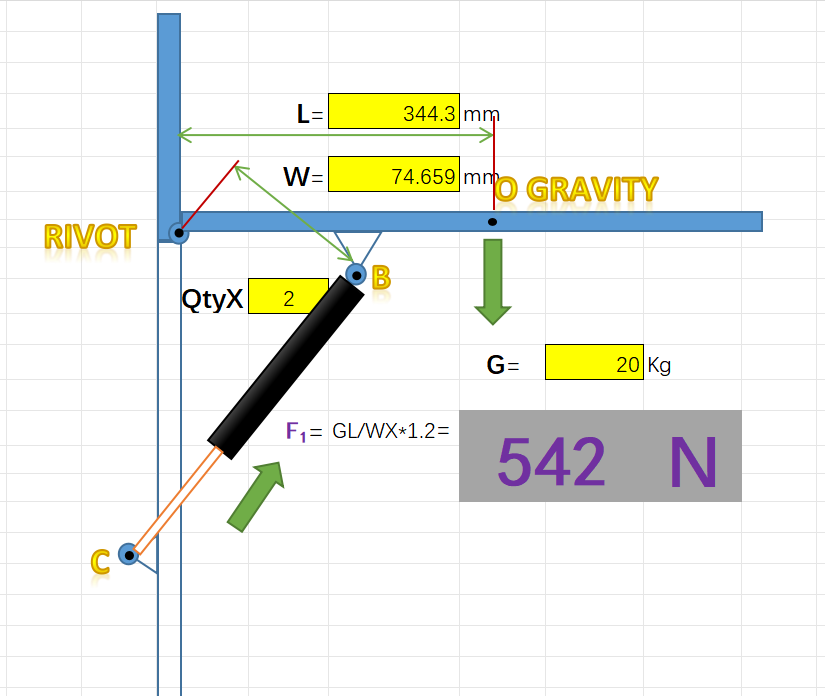
- Force: Calculate required force using ( F = \frac{\text{Load Weight (N)} \times \text{Distance to CoG}}{\text{Distance to Mount}} ), add 10–15% safety margin.
- Stroke & Length: Measure the travel distance (stroke) and ensure extended/compressed lengths fit your space (follow ( \text{Extended Length} \geq 2 \times \text{Stroke} + 80mm ) for component clearance).
2. Match Material to Environment
- Choose 316L stainless steel for saltwater, chemicals, or outdoor use.
- Opt for 304 stainless steel for general indoor sanitary applications (e.g., food packaging).
3. Select End Fittings
- Threaded ends (M5–M10) for rigid mounts, ball sockets for angular movement, eyelets for pivot points.
- Ensure fittings are also stainless steel to avoid galvanic corrosion.
4. Consider Mounting Orientation
- Mount with the piston rod downward in the primary rest position—keeps oil at the main seal, extending service life.
- Verify manufacturer guidelines for horizontal or angular mounting (some models support 360° orientation).
5. Validate Compliance
- For food/pharmaceutical use, confirm food-grade oil and FDA/GMP compliance.
- For marine use, check 316L grade and salt spray test certification.
Final Considerations
Stainless steel gas springs are the gold standard for applications demanding corrosion resistance, hygiene, and reliable motion control. By aligning force, stroke, material, and fittings with your environment and load, you’ll ensure long-lasting performance. Reputable manufacturers like JP (www.jpgasspring.com), Camloc, and Bansbach offer customizable options—always refer to datasheets for detailed specs and consult technical support for complex applications.
Whether you’re outfitting a boat, food processing line, or industrial machine, a well-selected stainless steel gas spring delivers durability, safety, and low maintenance—even in the toughest conditions.